

Bloody Sunday (1965)
Site: The Edmund Pettus Bridge in Selma, Ala.
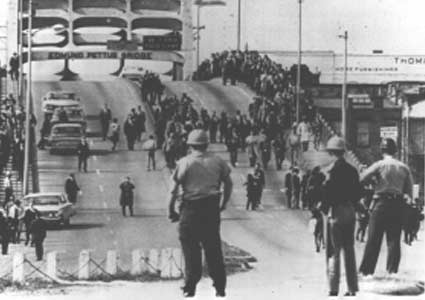
Then: Carrying U.S. Highway 80 across the Alabama River, the bridge also spans a critical moment in civil rights history. On March 7, 1965, activists attempted to cross the bridge on a planned march to the state capital in Montgomery, rallying for an end to discriminatory voting practices that once disenfranchised black voters.
That Sunday, about 600 marchers crossed the bridge when they confronted a wall of local police officers armed with tear gas and nightsticks. Some of the marchers were knocked off their feet by the officers and beaten with clubs. Many activists were gassed. “The day became known as Bloody Sunday,” says the National Park Service, which later named the Selma-to-Montgomery route as a U.S. National Historic Trail. It took marchers three attempts to successfully cross the bridge. Protected by U.S. soldiers, they reached the Alabama State Capitol building in Montgomery on March 25. In August of that year, President Lyndon Johnson signed the Voting Rights Act.
Photo: Police await protesters on the Edmund Pettus Bridge in Selma, Ala., in March 1965.